Toyota Material Handling says it has experienced a surge in enquiries for its range of automated and robotic warehouse solutions since the increase in National Insurance employer contributions was announced in the Government’s autumn budget statement.
The hike in the rate at which NI contributions are paid – from 13.8 per cent to 15 per cent – combined with a lower threshold after which employers start paying NI on an employee’s salary, has added considerably to the wage bill of most companies.
Indeed, it is estimated that for each individual forklift truck driver employed on an annual salary of around £23,400 (a UK lift truck operator’s average yearly earnings according to talent.com) the NI changes will add in the region of £800 per operator, per year, to a company’s staff costs.
“With the prevailing shortage of warehouse workers already driving wage competition, interest in automated systems was high before the budget, but since the increase in NI costs announced by the Chancellor of the Exchequer the number of ‘serious’ requests we’ve been getting for information about automation and robotics has increased significantly,” says Toyota’s Paul Freeman, Head of Business Development.
Paul continues: “By effectively making it more difficult and costly to recruit warehouse personnel, the Chancellor of the Exchequer has accelerated the trend for companies in all sectors to introduce automated and robotic solutions as a way of mitigating the impact of the high cost of labour on operating overheads.”
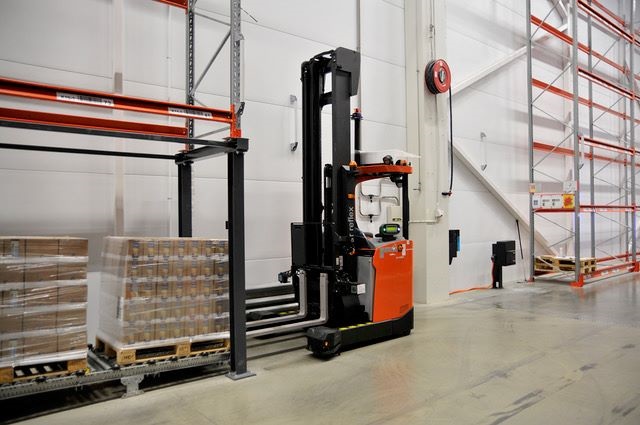
According to Paul Freeman, companies are particularly keen to explore the role that driverless forklift truck technology – such as Toyota’s Autopilot series – could play in their intralogistics processes.
“Transforming traditional lift trucks into automated guided vehicles (AGVs) not only eliminates reliance on forklift operators: the technology also delivers notable reductions in product and building infrastructure damage as well as increases in productivity and throghput rates,” explains Paul.
“Logistics services companies were already starting to transition away from their traditional reliance on people to a more automated approach, but since the budget the pace of change appears to have rapidly increased,” he adds.
As the world’s leading material handling brand, Toyota offer a complete range of automated storage and handling solutions. Visit https://toyota-forklifts.co.uk/automated-solutions/ to find out more.